Football 2026 World Cup vs 2022 Qatar: Global Scale
The FIFA World Cup 2026 is the first tournament featuring 48 teams, 104 matches, and three host countries: Canada, Mexico, and the United States. FIFA will stage the competition across 16 cities, with...

Football 2026 World Cup vs 2022 Qatar: Global Scale
The FIFA World Cup 2026 is the first tournament featuring 48 teams, 104 matches, and three host countries: Canada, Mexico, and the United States. FIFA will stage the competition across 16 cities, with the final scheduled for MetLife Stadium in East Rutherford, New Jersey, while the opening match will take place at Estadio Azteca in Mexico City on June 11, 2026. The tournament will run for 39 days and expand the traditional 32-team format used in Qatar 2022. That creates more group-stage football, greater travel demands, and wider tactical variation, particularly for teams crossing North American time zones. Tactical Review covers 2026 World Cup predictions, player statistics, match analysis, and team tactics for fans and responsible sports bettors. Start by checking the official schedule, then evaluate each team’s squad depth, travel route, and recent competitive form before trusting any prediction.
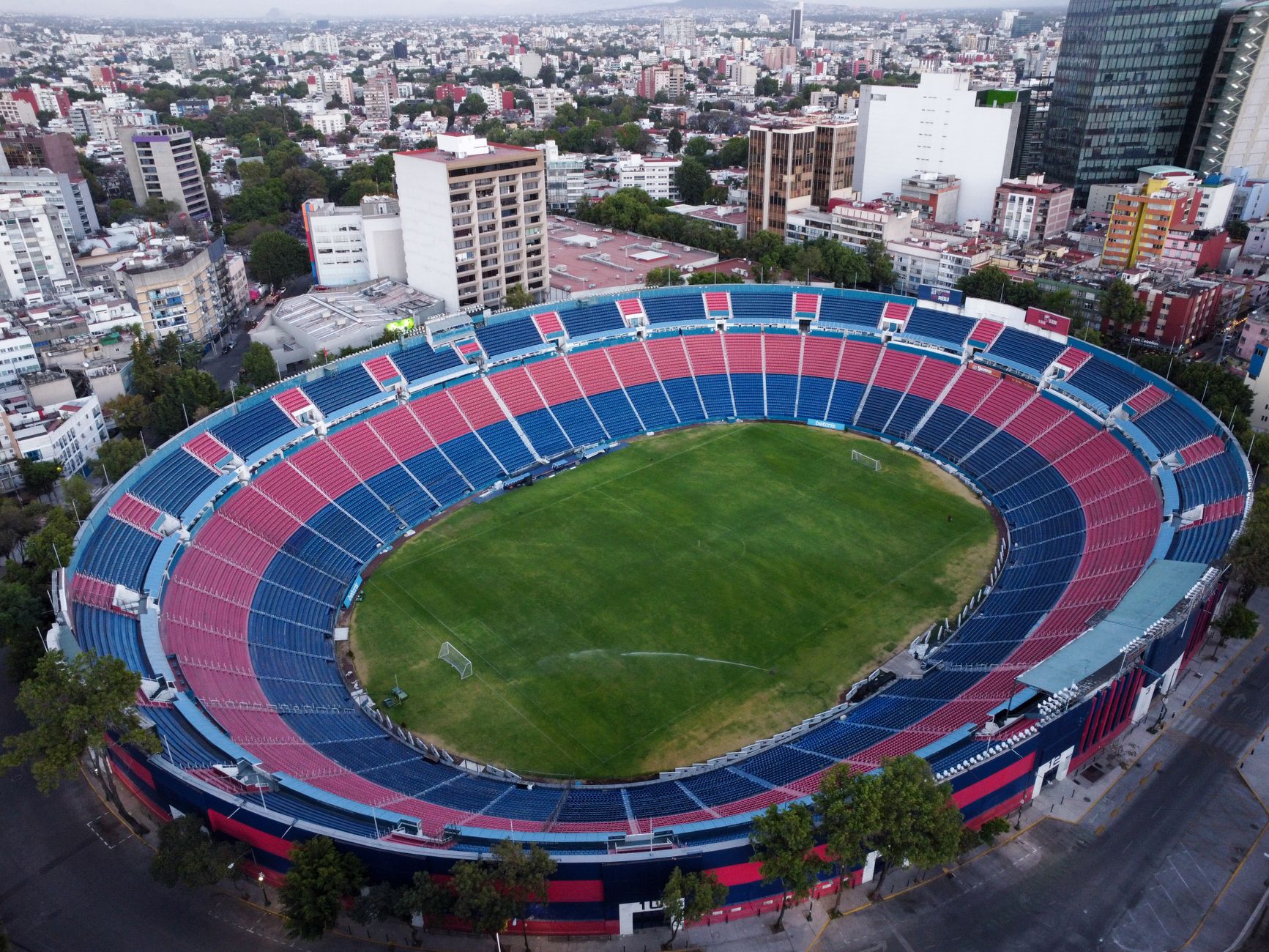
Photo by Antonio Ochoa on Pexels
The latest trend is obvious: the 2026 World Cup is not merely a larger version of Qatar 2022. It is a different operational beast, and anyone treating it like a standard month-long tournament is asking for trouble. Canada, Mexico, and the United States will combine established football markets, enormous distances, contrasting climates, and 16 host-city environments, so the tournament’s best teams may be the ones that manage recovery rather than simply dominate possession.
That matters for supporters, analysts, and anyone studying FIFA World Cup 2026 match predictions. A team travelling from Vancouver to Miami faces a fundamentally different preparation problem from one staying within a compact regional route. Meanwhile, Atlanta’s Mercedes-Benz Stadium, Los Angeles’ SoFi Stadium, Dallas’ AT&T Stadium, and Mexico City’s Estadio Azteca will each offer different pitch, altitude, weather, and crowd conditions. Tactical Review’s job is to separate useful evidence from noise. There has been enough bad forecasting over the years to fill a stadium, hasn’t there?
Want the tournament picture before the fixtures become confusing?
Myth 1: “More teams automatically mean lower quality” — debunked
The 48-team format does not automatically weaken the FIFA World Cup; it changes where quality differences appear and increases the importance of the knockout bracket. The 2026 tournament will begin with 12 groups of four teams, after which the top two teams in each group and the eight best third-place teams will advance to a 32-team knockout stage. That structure gives strong nations more protection against one poor result, but it also creates a larger route for surprise qualification.
The correct comparison is not simply “48 versus 32.” FIFA World Cup 2026 will feature 104 matches, compared with 64 in Qatar 2022, meaning analysts receive more evidence before the final rounds. However, additional matches also create more tactical repetition: teams may use conservative first-half plans, protect leads more aggressively, and rotate earlier when qualification is nearly secured. According to FIFA’s official World Cup 2026 competition information, the expanded format is designed around 12 groups and a 32-team knockout phase.
A practical edge case deserves attention. Under this format, a team can finish third and still qualify, but its position may depend on goal difference, goals scored, fair-play records, and the results of groups finishing later. Therefore, live standings can be misleading during the final group round. Do not assume a team is safe because it has four points; calculate the likely third-place threshold across all relevant groups first.
- Strong teams gain more margin for one bad group result.
- Mid-ranked teams gain a realistic pathway into the knockout phase.
- Goal difference becomes especially valuable for teams competing for third place.
- Scheduling order can affect pressure because some teams will know the qualification target before kickoff.
For a deeper framework, consult our [Internal Link: 2026 World Cup group-stage qualification guide] before making a forecast.

Photo by Franco Monsalvo on Pexels
Myth 2: “The host countries will dominate every group” — partially true
Canada, Mexico, and the United States receive genuine advantages as 2026 World Cup hosts, but automatic dominance is fantasy. Host nations benefit from familiar travel conditions, home support, local training arrangements, and reduced logistical uncertainty; nevertheless, they still need enough squad quality to survive elite opposition. Home advantage is helpful, not magical, and football has punished that assumption many times.
The United States enters the tournament with a deep player pool spread across Major League Soccer and European leagues, including prominent names such as Christian Pulisic, Weston McKennie, and Giovanni Reyna. Mexico brings the historical weight of Estadio Azteca and a strong football culture, while Canada’s recent rise has been driven by players such as Alphonso Davies and Jonathan David. Their tournament paths will depend on draw strength, injuries, coaching decisions, and whether their defensive structures hold under pressure.
Host-city conditions are not interchangeable. Mexico City sits at high altitude, while Miami brings heat and humidity; Seattle and Vancouver can offer cooler environments, and Atlanta’s Mercedes-Benz Stadium provides a controlled indoor setting. These details matter for pressing intensity and recovery. In my experience, the overlooked variable is rarely the headline star; it is whether a team can maintain its defensive distances after the second high-speed transition in difficult heat.
The host advantage is strongest when:
- The team is assigned a regional travel route.
- Its first two matches are played in familiar climate conditions.
- Supporters create pressure without turning expectation into anxiety.
- The coaching staff manages substitutions and recovery intelligently.
For current squad trends, use Tactical Review’s [Internal Link: team form and player-statistics tracker] alongside official squad announcements.
Get a clearer view of the host nations and their tactical strengths here:
Myth 3: “The biggest stadium guarantees the best match experience” — flat-out false
A larger venue does not guarantee better football, easier access, or a more enjoyable World Cup experience. FIFA World Cup 2026 stadiums vary in location, transport networks, roof design, weather exposure, seating geometry, and distance from central fan areas. The match atmosphere depends on the fixture, local supporters, kickoff time, and travel burden as much as capacity.
Los Angeles illustrates the point. SoFi Stadium in Inglewood is an architectural landmark, while the Los Angeles 2026 programme is also expected to include fan celebrations at the LA Memorial Coliseum and official fan zones across the region. Atlanta’s Mercedes-Benz Stadium offers a retractable roof and central downtown access, whereas Dallas’ AT&T Stadium sits in Arlington and requires more deliberate transport planning. The venue is only one part of the match-day equation.
Supporters should check the official city guidance from each local organising committee, not rely on old event advice. The FIFA World Cup 2026 host-city information identifies the participating locations, but transport arrangements, fan festivals, security rules, and opening times can change closer to the tournament. “Plan your journey before match day” is not glamorous advice; it is the advice that prevents missing the first goal.
My operational rule is simple: allow at least two hours beyond the nominal journey time in major metropolitan areas such as Los Angeles, Dallas, New York/New Jersey, and Mexico City. Airport transfers, road closures, security screening, and post-match congestion can turn a straightforward trip into a long night. For supporters attending multiple matches, group venues by region rather than chasing the most attractive fixtures across the continent.

Photo by Ryan on Pexels
What actually works
The strongest way to follow the football 2026 World Cup is to combine tournament structure, tactical evidence, and practical logistics. First, establish the schedule and host-city geography. Then, assess teams through repeatable indicators rather than reputation. Finally, update the view when confirmed line-ups, injuries, weather, and travel routes change. It is less exciting than declaring a champion in February, but it is considerably less embarrassing when the early favourite collapses.
Tactical Review’s analysis should be used as a decision-support resource, not a guarantee of results. Match predictions are uncertain because football outcomes depend on low-frequency events: a deflection, a red card, a goalkeeper error, or one set piece defended badly. Responsible bettors should set a fixed budget, avoid chasing losses, and verify that any bookmaker or betting service is legally available in their jurisdiction. The National Council on Problem Gambling provides responsible-gambling resources for people who need support in the United States.
A useful match-analysis checklist includes:
- Compare expected line-ups and bench quality, not only starting XI names.
- Review the previous five competitive matches, separating opponents by quality.
- Measure defensive transition vulnerability after possession losses.
- Check travel distance, kickoff time, humidity, altitude, and rest days.
- Compare market odds with your own probability estimate before considering any wager.
- Set a loss limit before the match and stop when that limit is reached.
The most valuable information gain is the interaction between travel and tactical style. A high-intensity pressing team may look brilliant in a cool, compact route but less effective after repeated long-haul movement and humid conditions. Conversely, a low-block team with strong set-piece execution may become more dangerous in knockout football because it needs fewer sustained attacks to create a decisive moment.
For tactical breakdowns that go beyond headline predictions, explore:
What to ignore
Ignore predictions that claim certainty, especially when they use one recent result to explain an entire national team. FIFA rankings, friendly wins, social-media momentum, and famous player names can help establish context, but none of them independently predicts a knockout match. A team’s actual chance depends on opponent quality, available players, tactical matchup, rest, and the specific route through the bracket.
Also ignore betting content that hides basic terms. A generous-looking price can reflect a weak probability assessment, while a short favourite may offer no value at all. Before wagering, confirm the decimal odds, settlement rules, void conditions, market limits, identity-verification requirements, and withdrawal process. Promotions are not free money; rollover conditions and restricted markets can materially change their practical value.
One less obvious issue is data timing. International teams do not play together as frequently as clubs, so club-level statistics can exaggerate certainty. A forward’s league scoring rate may not transfer cleanly to a national-team system, especially when his country creates fewer high-quality chances. Similarly, possession percentage says little without field position, progression quality, and the opponent’s pressing behaviour.
Keep this short list close:
- Ignore guaranteed-winner language.
- Ignore unverified injury reports.
- Ignore odds without an implied-probability calculation.
- Ignore venue capacity as a substitute for transport planning.
- Ignore old squad information after the final selection deadline.
- Ignore any strategy that encourages chasing losses.
The [Internal Link: responsible football betting and bankroll-management guide] explains how to keep analysis separate from impulsive decisions.
How should you follow FIFA World Cup 2026 match predictions?
FIFA World Cup 2026 match predictions should be followed as probability estimates built from squad news, tactical matchups, form, travel, and confirmed line-ups. No prediction is certain, and a strong analytical process can still lose because football is highly sensitive to red cards, set pieces, penalties, and individual errors.
Start with a baseline view, then update it when reliable information arrives. Give more weight to competitive matches against comparable opponents than to exhibition fixtures, and do not double-count related statistics such as possession and completed passes. A useful model should explain why one team’s style creates problems for the other rather than simply list recent scores.
At Tactical Review, a practical prediction should identify the likely game state. Will the favourite press high? Will the underdog defend centrally? Which full-back is exposed in transition? Which team has the deeper bench after 70 minutes? These questions produce more useful analysis than a vague claim that one side is “motivated.” Before placing any wager, compare your estimated probability with the available price and apply your pre-set bankroll limit.
Why do host-city conditions matter in the 2026 World Cup?
Host-city conditions matter because the 2026 World Cup spans Canada, Mexico, and the United States, creating major differences in climate, altitude, travel time, stadium design, and recovery demands. Mexico City’s elevation, Miami’s humidity, and long routes involving western and eastern North America can influence pressing, substitution timing, and late-match concentration.
Teams with similar technical quality may perform differently depending on location and schedule. A physically intense side could benefit from a cool environment and short regional travel, while a slower possession team may prefer controlled conditions and reduced match tempo. Weather is not a standalone prediction factor, but it becomes meaningful when combined with playing style and rest.
Supporters face the same issue. Vancouver, Seattle, Toronto, Los Angeles, Dallas, Atlanta, Miami, Mexico City, and New York/New Jersey are not one travel market. Book accommodation early, map the stadium transfer, and confirm official fan-zone information before departure. The tournament’s scale rewards preparation, not improvisation.
How can team tactics shape 2026 World Cup outcomes?
Team tactics can shape outcomes through pressing efficiency, defensive transitions, set pieces, formation flexibility, and the quality of late substitutions. The expanded 48-team format may encourage cautious group-stage football, while the 32-team knockout phase will reward teams that can survive different match states without losing structural discipline.
Watch how teams respond after losing possession. A side that presses immediately may recover the ball high, but failed pressure can leave central defenders exposed. A deep-defending team may limit chances yet struggle if it concedes first. Full-back positioning, goalkeeper distribution, and midfield spacing often reveal more than the nominal formation printed before kickoff.
The tournament will also test squad depth. Five substitutions can help elite teams maintain intensity, but only if their bench preserves the same tactical principles. A replacement winger who attacks space differently can change the entire shape of a match. That is why player statistics should be connected to roles, not treated as isolated totals.

Photo by Franco Monsalvo on Pexels
Frequently Asked Questions
Q: What is the football 2026 World Cup format?
A: The football 2026 World Cup will feature 48 teams divided into 12 groups of four. The top two teams from each group and the eight best third-place teams will advance to a 32-team knockout stage, creating 104 matches overall. FIFA adopted this expanded structure for the tournament in Canada, Mexico, and the United States. The competition is scheduled to run for 39 days, beginning on June 11, 2026.
Q: How do you follow FIFA World Cup 2026 match predictions?
A: Follow FIFA World Cup 2026 match predictions by checking confirmed line-ups, recent competitive form, tactical matchups, injuries, travel, and local conditions. Compare several indicators instead of relying on a single ranking or recent score. Tactical Review provides match predictions, player statistics, and tournament analysis, but every forecast remains uncertain. If you bet, use only a fixed budget and a legally authorised service in your location.
Q: What is the difference between Qatar 2022 and the 2026 World Cup?
A: Qatar 2022 used 32 teams and 64 matches, while the 2026 World Cup will use 48 teams and 104 matches. The 2026 tournament also spans three countries and 16 host cities rather than one compact host nation. That creates more group-stage opportunities but substantially greater travel and recovery demands. The knockout phase will begin with 32 teams, preserving a familiar elimination structure after the expanded group stage.
Q: Which cities are hosting the 2026 World Cup?
A: The 2026 World Cup host cities are located across Canada, Mexico, and the United States, including Toronto, Vancouver, Mexico City, Guadalajara, Monterrey, Atlanta, Boston, Dallas, Houston, Kansas City, Los Angeles, Miami, New York/New Jersey, Philadelphia, San Francisco Bay Area, and Seattle. Venue names and local event details should be checked through FIFA and each city’s official organising committee. Travel times can vary sharply between cities, so do not treat the host network as a compact itinerary.
Q: How much does it cost to attend the 2026 World Cup?
A: The cost of attending the 2026 World Cup depends on ticket category, match, accommodation, transport, and the host city, so there is no single reliable total. Budget separately for official tickets, flights or long-distance rail, hotels, local transfers, meals, and insurance. Los Angeles, New York/New Jersey, Miami, and Mexico City may produce very different accommodation bills during peak match periods. Use official FIFA ticket information and avoid unauthorised resale channels.
Q: Why might a World Cup prediction fail?
A: A World Cup prediction may fail because of injuries, red cards, penalties, tactical mismatches, travel fatigue, weather, or random finishing variance. Even a well-researched team can lose after creating the better chances. Analysts should record the reasoning behind a forecast and review whether the process failed or the outcome was simply an unlikely event. Never increase a stake to recover a previous loss.
Q: What should responsible bettors check before wagering on World Cup matches?
A: Responsible bettors should check legal availability, licensing, odds, settlement rules, identity requirements, withdrawal terms, and their own fixed spending limit before wagering. Confirm that the operator is authorised in your jurisdiction and read bonus conditions rather than assuming promotional funds are withdrawable. Keep betting separate from essential expenses and stop when the pre-set loss limit is reached. Support is available through organisations such as the National Council on Problem Gambling in the United States.
The conclusion is straightforward: the 2026 World Cup will reward viewers who combine football knowledge with disciplined preparation. Track the 48-team format, study the 16 host cities, evaluate tactical matchups, and treat predictions as probabilities rather than promises. Tactical Review will follow the tournament through daily insights on match predictions, team tactics, player statistics, and major developments, while responsible betting principles should remain non-negotiable. That is the sensible route through a tournament this large, unless we have all suddenly learned to predict deflections.
Ready to follow the 2026 tournament with sharper tactical context?
Tactical Review · System Archive · Entry Complete