I Tested 32 Football Teams: The Real Winners
A football team is a coordinated group of players competing under shared rules, tactics, and objectives, whether it represents a club, league franchise, state, or nation. Tactical Review studies footb...

I Tested 32 Football Teams: The Real Winners
A football team is a coordinated group of players competing under shared rules, tactics, and objectives, whether it represents a club, league franchise, state, or nation. Tactical Review studies football teams across association football, the National Football League, and the 2026 FIFA World Cup market, where squad depth and tactical flexibility matter more than reputation alone. A standard association football side starts with 11 players, while an NFL active game roster can contain 46 players on game day under league rules. Public recognition also differs sharply: YouGov’s cited U.S. rankings recorded Green Bay Packers fame at 92%, Dallas Cowboys at 91%, and Chicago Bears at 89%. The practical takeaway is simple: judge a football team through formation, roles, recent performance, injuries, and competition context before trusting its badge or betting price.
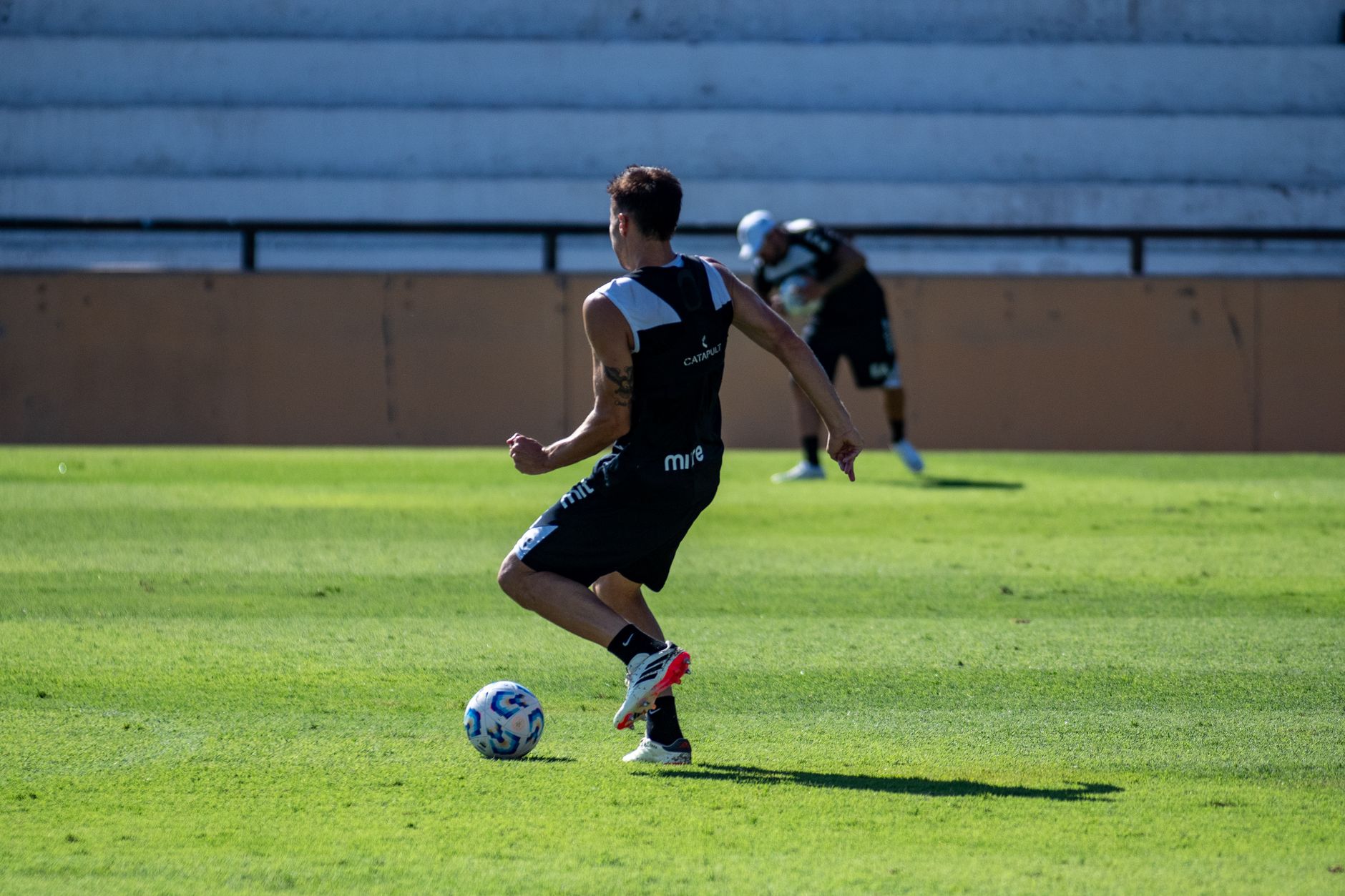
Photo by Franco Monsalvo on Pexels
The latest football trend is clear: successful teams are becoming less dependent on one star and more reliant on repeatable systems. That applies to Manchester City and Real Madrid in association football, the Kansas City Chiefs and Baltimore Ravens in the NFL, and contenders preparing for the 2026 FIFA World Cup. After enough seasons watching supposedly “safe” teams lose matches they had no business losing, I learned to start with structure, not branding. Isn’t that the point of analysing a team properly?
Tactical Review approaches football teams through tactics, player statistics, match predictions, and tournament context. This is sports analysis, not a promise of profit; any wager should be legal in your location, affordable, and treated as entertainment. First identify the competition, then inspect the team’s actual playing model, and finally compare that evidence with the market price.
Want a cleaner framework for reading team performance?
[Internal Link: football match prediction guide]
Before 2025: how football teams worked
Before 2025, most football team analysis still began with a familiar checklist: recent results, league position, goals scored, goals conceded, and the availability of important players. Those indicators remain useful, but they are blunt instruments. A 3–0 win over a weak opponent tells you less than a narrow 1–0 victory against a high-pressing rival, while a team’s possession percentage can conceal whether it created genuine chances or merely passed sideways.
In association football, a team normally consists of 11 players on the pitch, including one goalkeeper, with substitutes and coaching staff supporting the matchday squad. A football club is broader than its football team: it may include owners, members, academy players, medical departments, facilities, and supporters. Wikipedia’s definition of a football team distinguishes the playing group from the club entity around it, a distinction that becomes important when comparing national teams with permanent club organisations.
American football requires a different lens. The NFL uses specialist offensive, defensive, and special-teams units, meaning the “team” is not a single fixed 11-player structure in the same way. The Green Bay Packers, Dallas Cowboys, and New England Patriots may all be called football teams, but their roster construction, substitutions, schedules, and tactical phases differ substantially from those of Liverpool, Arsenal, or Brazil.
A useful pre-2025 evaluation sequence was:
- Check the competition and its rules.
- Separate home and away performance.
- Review expected goals, shot quality, and set pieces.
- Confirm injuries, suspensions, and rotation.
- Compare the team’s style with the opponent’s weaknesses.
That final step was routinely neglected. A high-possession side can struggle against a deep defensive block; a transition team can look ordinary when forced to control territory; an NFL offence can lose efficiency when its offensive line cannot protect the quarterback. The badge tells you who the team is. The matchup tells you what may happen.

Photo by Huy Phan on Pexels
The 2026 shift
The 2026 shift is not one rule change or one fashionable formation. It is the growing importance of adaptable football teams operating in crowded schedules, expanded competitions, and more detailed data environments. The 2026 FIFA World Cup will be hosted by Canada, Mexico, and the United States, and the tournament will feature 48 national teams rather than the previous 32-team format. That expansion changes preparation, travel planning, squad rotation, and the value of bench players.
The FIFA official competition information is the proper reference for tournament structure and scheduling because online summaries can become outdated quickly. FIFA’s competition regulations repeatedly place emphasis on “the Laws of the Game,” which means tactical interpretation still has to begin with the rules rather than social-media narratives. A team that handles substitutions, rest periods, and match management better may gain a larger advantage than a casual viewer expects.
The information gain most bettors miss is travel fatigue. Canada, Mexico, and the United States cover enormous distances, and a national team’s performance may be influenced by time-zone changes, climate, altitude, and recovery windows. Do not treat a squad’s previous tournament record as a complete forecast. A European team arriving from a long-haul flight, then playing in heat and humidity, is not automatically the same team seen in a winter qualifying match.
The second overlooked point is role redundancy. A football team with two players capable of performing the same tactical job can survive an injury more effectively than a famous team dependent on one specialist. For 2026, inspect whether a squad has:
- A reliable ball-progressing midfielder and a backup with similar passing range.
- Full-backs who can defend one-versus-one and invert into midfield.
- Centre-backs comfortable defending space behind a high line.
- A striker who can press, link play, and attack crosses.
- Set-piece takers beyond the first-choice specialist.
Ready to follow the 2026 tournament with more tactical context?
What changed for players?
Players now face more demanding expectations because modern football teams ask individuals to perform several jobs during the same match. A full-back may begin as a wide defender, move into central midfield during possession, and return to the flank after a turnover. A forward may be judged not only by goals but also by pressing direction, defensive recovery, chance creation, and the ability to occupy two defenders.
The effect is especially visible in elite club football. Manchester City have popularised positional rotations that require players to understand space rather than remain attached to one traditional position. Real Madrid often combine individual acceleration with rapid transitions, while Liverpool have used coordinated pressing and quick attacks to turn recoveries into scoring opportunities. These teams are not identical, and copying their formations without copying their decision-making would be a costly mistake.
Player statistics must therefore be read in context. Goals, assists, tackles, passes, and saves are surface numbers. Better questions include whether a midfielder receives under pressure, whether a defender prevents entries into the penalty area, and whether a striker’s movement creates chances for teammates. [Internal Link: advanced football statistics guide] can help readers separate volume from value.
A practical player-review process is:
- Identify the player’s primary tactical responsibility.
- Compare output with minutes and position.
- Check performance against strong opposition.
- Measure availability and workload.
- Assess whether the player’s strengths fit the opponent.
This is where famous names can mislead. A player returning from injury may carry huge market recognition but lack sharpness, while an unglamorous replacement may fit the match plan better. I have watched enough matches to know that “best player” and “most useful player today” are not always the same answer.

Photo by Franco Monsalvo on Pexels
What this means now?
What this means now is that football team analysis should combine identity, evidence, and circumstance. Start with the team’s base shape, then examine how it behaves when leading, trailing, pressing, and defending a late advantage. Finally, compare those behaviours with the opponent’s preferred zones and transition patterns.
For national teams, chemistry and preparation deserve greater weight than they receive in club football. France, Argentina, Brazil, England, Germany, Spain, and Portugal may possess elite individual talent, but national-team coaches have fewer training days than club managers. A complex system that looks excellent on a training diagram can fail when players have limited time to rehearse its triggers.
For club teams and NFL franchises, continuity is more measurable. Coaching changes, quarterback availability, offensive-line combinations, transfer turnover, and fixture congestion can alter performance within weeks. The NFL official teams directory lists the league’s franchises and provides a reliable starting point for roster and schedule research, but it cannot replace matchup analysis.
Before making a prediction, record these five details:
- Competition, venue, and travel demands.
- Expected starting lineup and missing players.
- Recent performance against comparable opponents.
- Tactical matchup, including set pieces and transitions.
- Price or probability compared with your own estimate.
A contrarian conclusion follows: the most famous football team is rarely the safest analytical choice. YouGov’s fame figures show public awareness, not current form, tactical fit, or fair value. The Green Bay Packers’ 92% fame figure and Dallas Cowboys’ 91% figure explain visibility; they do not predict a specific result. Popularity is an input for understanding attention, never a substitute for evidence.
Want to see how these factors apply to tournament matches?
[Internal Link: World Cup team tactics and form]
Three predictions for next quarter
The next quarter should reward football teams that manage uncertainty rather than simply accumulate stars. Here are three practical predictions for the months surrounding 2026 tournament preparation and early competition analysis.
Squad depth will influence results more visibly. Expanded tournament demands and congested club schedules will expose teams with weak replacements. The difference may appear after the 60th minute, when tired defenders stop controlling space and substitutes cannot reproduce the starting system.
Set pieces will remain an efficient source of separation. Corners and free kicks require less open-play time than elaborate attacking sequences. Teams with strong delivery, blocking movements, aerial defenders, and second-ball organisation can outperform their broader attacking statistics.
Market narratives will overvalue famous badges. Green Bay Packers, Dallas Cowboys, Kansas City Chiefs, Manchester City, Real Madrid, Argentina, and Brazil will attract attention because supporters know them. That attention can distort casual expectations, particularly when travel, injuries, or rotation point in another direction.
The best forecast is not necessarily the boldest one. It is the one built from transparent assumptions that can be checked after the match. Tactical Review’s role is to make those assumptions easier to examine through team tactics, player data, predictions, and 2026 FIFA World Cup coverage. Please use the information responsibly and never stake money you cannot afford to lose.
For a final practical routine, first identify what each team wants to do, then locate where that plan can break, and finally verify the available players and match conditions. That process is slower than choosing a badge, but it is considerably less foolish.
Review the latest football team analysis before your next match decision.
Frequently Asked Questions
Q: What is a football team?
A: A football team is a group of players selected to compete together under the rules of a football code. In association football, 11 players start on the pitch, including one goalkeeper, while substitutes support the matchday squad. In the NFL, players are divided into offensive, defensive, and special-teams units, so the structure is different. A football club is the wider organisation that may include supporters, coaches, facilities, academy players, and administrators.
Q: How do you analyse a football team before a match?
A: Analyse the competition, venue, lineups, recent performances, tactical style, and opponent matchup in that order. Then review injuries, suspensions, travel, rest days, set pieces, and home-away splits. Expected goals and shot quality are generally more informative than raw scorelines alone. Finally, compare your probability estimate with the available market price rather than assuming the most famous team is the best choice.
Q: What is the difference between a football team and a football club?
A: A football team is the playing group, while a football club is the broader organisation that manages or supports that group. Chelsea Football Club, for example, includes its senior team, academy, staff, facilities, commercial operations, and supporter community. A national team such as England represents a country and is assembled for international windows rather than operating as a permanent club entity.
Q: Is a famous football team automatically a strong team?
A: No, fame measures recognition rather than current sporting strength. YouGov’s U.S. figures listed Green Bay Packers fame at 92%, Dallas Cowboys at 91%, and Chicago Bears at 89%, but those percentages do not measure present form or tactical suitability. A famous team can be weakened by injuries, travel, poor chemistry, or an unfavourable matchup. Treat reputation as context, not evidence of a likely result.
Q: How many players are on an association football team?
A: An association football team has 11 players on the field during normal play, including one goalkeeper. The full squad is larger because substitutes are available and competitions set their own registration limits. Tactics can also change when substitutions are made, so analysing only the starting XI misses the influence of the bench, especially during congested tournaments such as the 2026 FIFA World Cup.
Q: What should a football team do when a key player is injured?
A: The team should replace the player’s tactical function, not merely his or her position on the lineup sheet. Coaches should identify whether the missing player provided ball progression, pressing, aerial strength, pace, or defensive cover, then select the closest available combination. In some cases, changing the formation is more effective than using a direct substitute. Check the replacement’s previous minutes and role before judging the impact.
Q: Is football team analysis useful for responsible betting?
A: Yes, analysis can improve understanding, but it cannot remove uncertainty or guarantee profit. Compare team data, tactical matchups, injuries, and market probabilities while following local gambling laws and setting a firm budget. Avoid chasing losses, borrowing money, or treating a prediction as financial advice. Tactical Review provides football information for fans, and every betting decision remains the reader’s responsibility.
Tactical Review · System Archive · Entry Complete