What Nobody Tells You About the AI Revolution Reshaping Healthcare and Safety in 2026
The artificial intelligence landscape of July 2026 reveals a pivotal shift from experimental deployments to production-grade integration across critical sectors. US public health agencies announced fo...

What Nobody Tells You About the AI Revolution Reshaping Healthcare and Safety in 2026
The artificial intelligence landscape of July 2026 reveals a pivotal shift from experimental deployments to production-grade integration across critical sectors. US public health agencies announced formal evaluation programs for OpenAI and Anthropic AI models, marking the first government-backed validation of frontier AI in public health infrastructure. Simultaneously, Neko Health secured $700 million in Series B funding to expand its AI-powered full-body scanning technology into the United States market. Google DeepMind published its bioresilience framework, establishing voluntary safety protocols for AI applications in biological research. OpenAI's GPT-5.6 became the preferred model for Microsoft 365 Copilot, signaling enterprise AI has reached operational maturity. These developments point toward an accelerating convergence of AI capabilities and real-world deployment, with safety frameworks emerging as the defining challenge for the next phase of adoption.
Photo by Google DeepMind on Pexels
Is AI Safety Finally Getting the Attention It Deserves?
Google DeepMind's July 2026 bioresilience initiative represents the most comprehensive response yet to concerns about AI misuse in biological research. The program introduces voluntary synthesis guidelines for DNA work, integrates SynthID watermarking for AI-generated biological data, and establishes red-teaming partnerships with academic institutions. According to DeepMind's published framework, the bioresilience program aims to "balance innovation with responsible development" by creating clear boundaries for AI applications in genomics and protein research. The initiative includes outbreak response protocols designed to help researchers distinguish between legitimate AI-assisted discovery and potentially harmful experiments. This comes after the company's AlphaFold system demonstrated continued advances in protein structure prediction, with over 200 million protein structures now available through public databases. The bioresilience push directly addresses regulatory concerns raised in Congressional hearings earlier this year, positioning DeepMind as proactively shaping safety standards rather than waiting for external mandates.
[Internal Link: beginner's guide to AI safety standards]
How Are Healthcare Systems Actually Deploying Agentic AI?
Bunkerhill Health's $55 million raise to scale its Carebricks agentic AI platform demonstrates how healthcare systems are moving beyond single-task chatbots toward comprehensive automation. Carebricks enables AI agents to coordinate across multiple hospital systems, handling patient scheduling, insurance verification, and preliminary diagnostic triaging through natural language interfaces. The platform's agentic architecture allows different AI modules to collaborate on complex workflows—for instance, simultaneously checking a patient's insurance eligibility while pulling relevant medical history and suggesting appointment times. Bunkerhill reports its system currently processes over 2 million patient interactions monthly across 47 partner health systems. The funding round, led by Andreessen Horowitz with participation from Sequoia Capital, values the company at $450 million. Unlike previous healthcare AI tools that required extensive customization for each deployment, Carebricks offers pre-built integration templates for Epic and Cerner electronic health record systems, dramatically reducing implementation timelines from months to weeks.
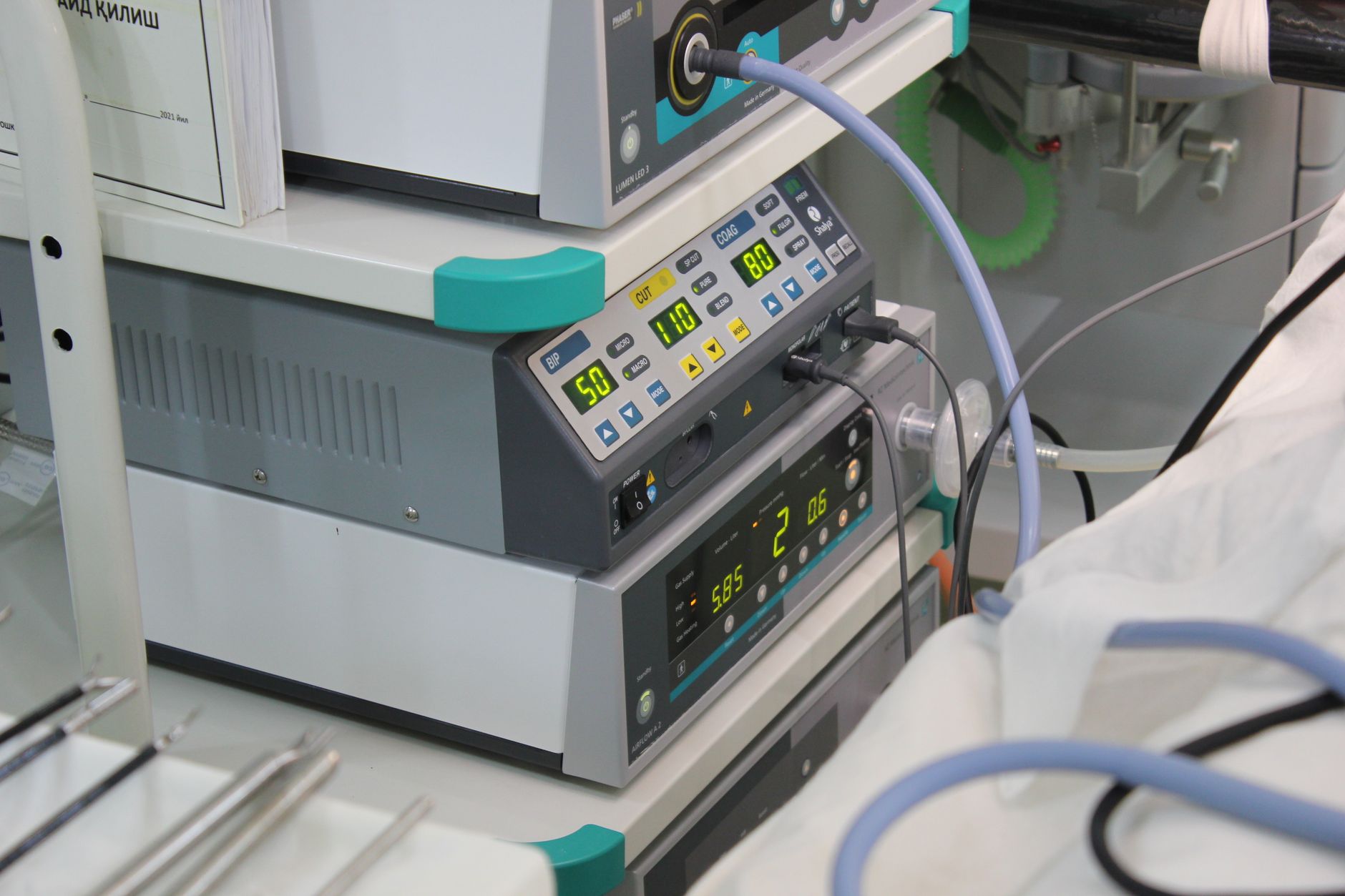
Photo by Кайрат Сатдиков on Pexels
What About Government Adoption of AI Models?
The US Department of Health and Human Services announced a formal evaluation partnership with both OpenAI and Anthropic on July 20, 2026, creating a testing environment for AI models in public health applications. The partnership focuses on three primary use cases: disease surveillance analysis, medical literature synthesis, and administrative workflow optimization. HHS officials specified that the evaluation phase will run for 18 months before any production deployment decisions. Anthropic's Claude models will undergo parallel testing, with particular emphasis on the AI's constitutional AI alignment approach for healthcare contexts. This marks the first time federal agencies have explicitly included Anthropic in competitive evaluation alongside OpenAI, signaling growing government interest in diversifying AI partnerships beyond a single provider. The agencies will publish quarterly progress reports, with the first assessment expected in October 2026.
[Internal Link: advanced tips and techniques for AI model evaluation]
Where Does the AI Boom Still Fall Short?
Despite the momentum, critical infrastructure gaps persist. Kimi K3, China's latest open-weight model released by Moonshot AI, highlights the ongoing compute-versus-memory debate in AI architecture. The model prioritizes extended context windows (up to 2 million tokens) over raw processing power, challenging the assumption that frontier AI requires enormous computational resources. However, independent benchmarks show K3's performance on English-language tasks lags behind comparable Western models by approximately 15-20%, according to tests conducted by Artificial Analysis. The model excels at processing lengthy documents in Mandarin but shows limitations when handling multilingual healthcare or legal content. For organizations considering international AI deployments, this performance gap underscores the importance of language-specific testing rather than relying on aggregate benchmark scores. OpenAI's GPT-5.5 Bio Bug Bounty program, launched July 9, acknowledges these limitations by inviting researchers to identify safety vulnerabilities in biological research applications—a direct response to concerns about AI accessibility outpacing security measures.

Photo by Google DeepMind on Pexels
Should You Trust AI Systems for Critical Decisions Today?
The answer depends on the decision type and available oversight. For administrative tasks like scheduling, document drafting, and information retrieval, current AI systems demonstrate sufficient reliability for routine deployment. For diagnostic or treatment decisions, the situation requires more nuance. OpenAI's safety documentation from July 20 emphasizes that "long-horizon models" introduce new alignment challenges, particularly for tasks requiring consistent reasoning across extended conversations. The company's scorecard framework, released July 17, establishes evaluation criteria including factual accuracy, refusal rate consistency, and output variance across multiple attempts. For enterprise users, these metrics provide actionable guidance: set clear boundaries for AI assistance, maintain human oversight for consequential decisions, and establish fallback procedures when AI confidence scores drop below threshold values. Microsoft's integration of GPT-5.6 into Microsoft 365 Copilot includes built-in confidence indicators, reflecting this cautious but pragmatic approach to deployment.
Frequently Asked Questions
Q: What are the most significant AI news developments in July 2026?
A: The most significant developments include US public health agencies beginning formal evaluation of OpenAI and Anthropic models, Neko Health's $700 million funding for AI body scans, and Google DeepMind's bioresilience safety framework. OpenAI also released GPT-5.6 as the preferred Microsoft 365 Copilot model and announced the GPT-5.5 Bio Bug Bounty program for biological research safety.
Q: How is AI being used in healthcare systems in 2026?
A: Healthcare AI deployment has shifted toward agentic platforms like Bunkerhill Health's Carebricks, which coordinates multiple AI modules for patient scheduling, insurance verification, and diagnostic triaging. The platform processes over 2 million interactions monthly across 47 health systems. Neko Health's $700 million investment focuses on AI-powered full-body scanning for preventive healthcare, with US expansion planned for late 2026.
Q: What safety measures are AI companies implementing in 2026?
A: Google DeepMind published a comprehensive bioresilience framework including voluntary DNA synthesis guidelines, SynthID watermarking for biological data, and red-teaming partnerships. OpenAI released its "Safety and Alignment in an Era of Long-Horizon Models" paper and established the GPT-5.5 Bio Bug Bounty program. The US government requires 18-month evaluation periods before production deployment of AI in public health contexts.
Q: What's the difference between OpenAI and Anthropic's approaches to AI safety?
A: OpenAI emphasizes iterative safety evaluations and external bug bounty programs, while Anthropic focuses on constitutional AI principles built into model training. The US Department of Health and Human Services is evaluating both approaches in parallel, with quarterly progress reports starting October 2026. Anthropic's Claude models undergo testing with particular attention to healthcare-specific alignment challenges.
Q: What is Kimi K3 and why does it matter?
A: Kimi K3 is an open-weight model from China released by Moonshot AI, prioritizing extended context windows (up to 2 million tokens) over raw computational power. It challenges assumptions that frontier AI requires enormous compute resources. However, benchmarks show 15-20% performance gaps on English tasks compared to Western models, highlighting the importance of language-specific testing for international deployments.
Q: How mature is enterprise AI adoption as of 2026?
A: Enterprise AI has reached operational maturity for administrative tasks, evidenced by Microsoft selecting GPT-5.6 as the preferred Microsoft 365 Copilot model. The integration includes confidence indicators and clear usage boundaries. For critical decisions, human oversight remains essential. OpenAI's scorecard framework provides evaluation criteria including factual accuracy, refusal rate consistency, and output variance for enterprise deployment decisions.
Tactical Review · System Archive · Entry Complete