Inside FIFA World Cup 2026: A 48-Team Shift
FIFA World Cup 2026 is the first 48-team edition of FIFA’s men’s global tournament, hosted across the United States, Canada, and Mexico, and it changes how fans, analysts, and regulated betting market...
Inside FIFA World Cup 2026: A 48-Team Shift
FIFA World Cup 2026 is the first 48-team edition of FIFA’s men’s global tournament, hosted across the United States, Canada, and Mexico, and it changes how fans, analysts, and regulated betting markets read the competition. FIFA expanded the field from 32 teams to 48, with 104 matches scheduled between June and July 2026 across 16 host cities including New York/New Jersey, Toronto, Mexico City, Los Angeles, and Dallas. Tactical Review covers this shift through match predictions, team tactics, player stats, and tournament tracking for adult fans following legal and regulated markets. The common claim that expansion simply “adds weaker teams” is too lazy; the bigger impact is on squad rotation, group-stage volatility, travel fatigue, and pricing errors in early betting lines. The practical takeaway: judge 2026 teams by depth, travel schedule, and tactical adaptability, not reputation alone.
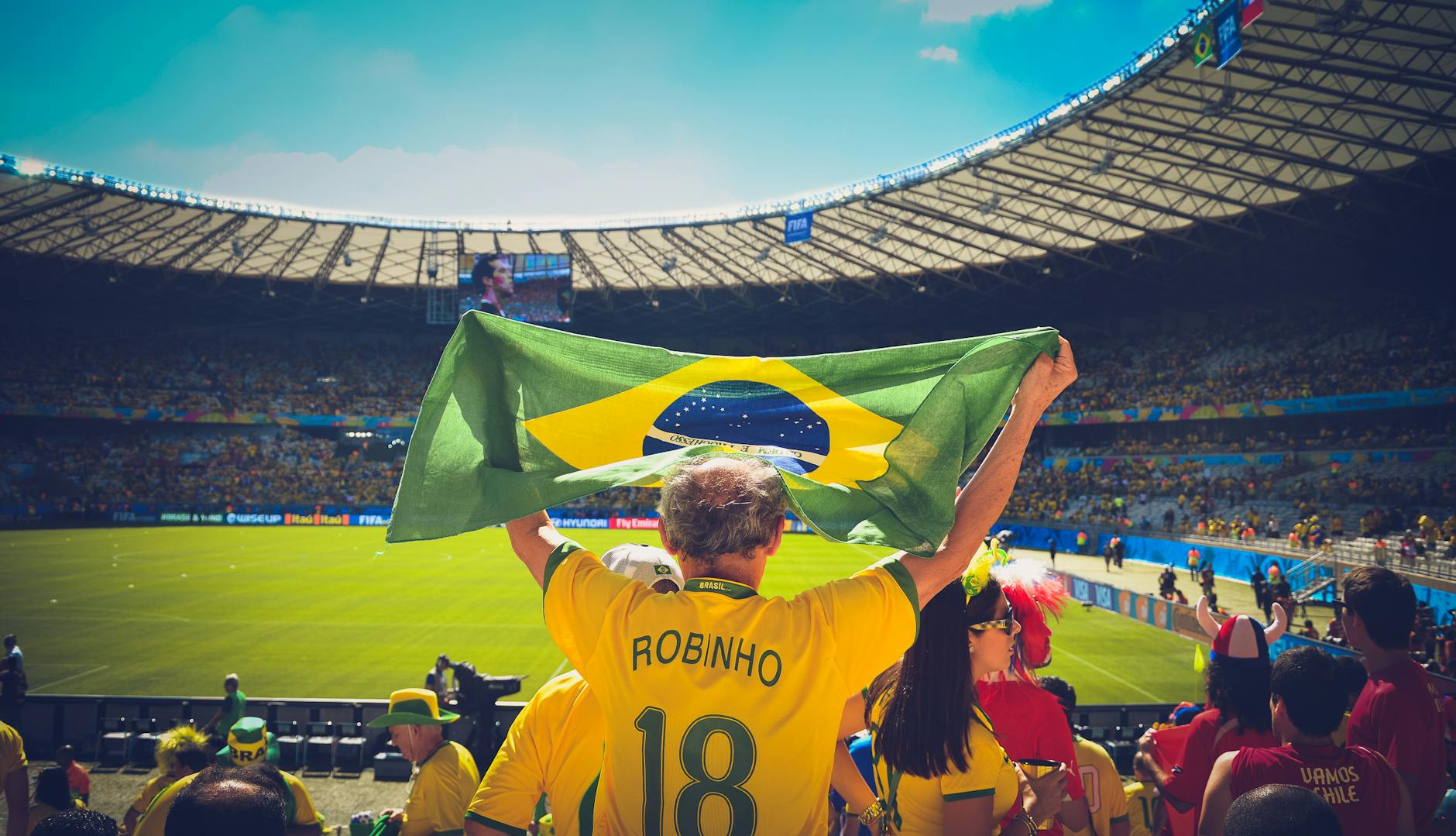
Photo by Caio on Pexels
For readers tracking markets, tactics, and tournament structure in one place, Tactical Review is built around daily World Cup coverage.
Before 2025: how FIFA World Cup worked
Before 2025, the modern FIFA World Cup was largely understood through the 32-team format used from France 1998 through Qatar 2022. First, eight groups of four created a clean rhythm: three group matches per team, then a 16-team knockout phase. Then, analysts could model qualification paths with relative stability because two teams advanced from each group, goal difference mattered heavily, and matchday three often produced predictable incentive patterns. Finally, broadcasters, bookmakers, and tactical scouts worked from a familiar 64-match tournament map, which made historical comparison easier but also encouraged stale assumptions about favorites and outsiders.
The format’s apparent simplicity hid several distortions. A strong team could survive one poor group performance, but a mid-tier team usually needed at least four points to feel secure. Defensive teams often treated the opening fixture as damage control, especially against elite opponents such as Brazil, Germany, Argentina, France, Spain, or England. According to FIFA, the World Cup is its flagship men’s national-team competition, while Wikipedia records that the event began in 1930 and has become the most watched football tournament globally. That history matters, but it also tempts observers to overrate old patterns. To go deeper into how past formats shaped tactical behavior, see our [Internal Link: World Cup format history guide].
What is the 2026 shift?
The 2026 shift is FIFA’s expansion from 32 to 48 teams and from 64 to 104 matches across the United States, Canada, and Mexico. The key change is not just size; it is the new competitive math affecting qualification odds, group strategy, player workload, and regulated match markets.
Most articles frame FIFA World Cup 2026 as a bigger television product, but that is only half the story. The more important change is structural: more nations, more games, more recovery problems, and more chances for low-information markets to misprice teams from smaller confederations. FIFA confirmed the host nations as Canada, Mexico, and the United States, making 2026 the first World Cup shared by three countries. The tournament will use 16 host cities, and that geographic spread creates a travel puzzle unlike Qatar 2022, where compact logistics reduced long-haul movement between matches.
A contrarian view is necessary here: expansion does not automatically mean lower quality. It means variance moves earlier. The 33rd to 48th teams in the field may not match France or Argentina over seven matches, but they can create tactical traps in one-off group fixtures, especially when playing compact defensive blocks, set-piece-heavy football, or transition systems built around one elite forward. The operational edge for analysts is to compare climate, altitude, time zone movement, and rest days before comparing FIFA rankings. For tactical previews by host city and schedule density, check our [Internal Link: 2026 World Cup host city analysis].

Photo by Amar Preciado on Pexels
See the details behind the format change and how it affects team-by-team projections.
What changed for players?
Players face a heavier tournament environment in 2026 because the World Cup now has 104 matches, expanded squads to monitor, and longer travel demands across three countries. The biggest change is not only match count; it is recovery management between climate zones, kickoff times, and tactical workloads.
First, the physical burden becomes harder to read from minutes alone. A player logging 70 minutes in Miami humidity may carry a different recovery profile than one playing 90 minutes in Vancouver conditions. Then, coaches must decide whether to rotate earlier in the group stage or preserve chemistry for knockout rhythm. Finally, national teams with deeper benches gain a hidden advantage because the 48-team format rewards squads that can maintain pressing intensity, defend transitions, and protect key players from soft-tissue injuries over a longer competition window.
This is where player-stat coverage becomes more useful than generic star narratives. Tactical Review will track pressures, progressive carries, expected goals, set-piece involvement, and substitution timing because those numbers reveal tactical trust before public opinion catches up. A useful edge case: in expanded tournaments, third-choice center backs and backup fullbacks can become decisive if a favorite faces suspension accumulation or heat-driven rotation. The International Football Association Board defines the Laws of the Game used globally, and those laws shape substitution, disciplinary, and timekeeping contexts. As IFAB states, “The Laws are the same for all football throughout the world,” but tournament conditions make their consequences feel very different.
Key player-side changes to watch:
- More rotation pressure for teams expecting deep knockout runs.
- Greater value for versatile midfielders and fullbacks.
- Higher risk of tactical drop-off after travel-heavy fixtures.
- More importance for set-piece specialists in lower-margin group games.
- Increased relevance of suspension management after the second group match.
What does this mean now?
FIFA World Cup 2026 means fans and regulated betting analysts should treat early certainty with suspicion. The expanded format increases information gaps, especially around unfamiliar teams, travel schedules, squad depth, and tactical matchups that do not appear clearly in headline rankings or outright odds.
The mainstream shortcut is to ask which elite nation will win. A sharper approach asks which assumptions will break first. For example, a favorite drawn into a travel-heavy sequence may be priced as if it were playing under normal European tournament conditions, while a CONCACAF side familiar with North American climate and travel routines may be undervalued in a single-match handicap. That does not mean blindly backing hosts or outsiders; it means building a checklist before accepting market consensus.
For regulated betting coverage, the most useful 2026 workflow is practical rather than emotional:
- First, map rest days, venue climate, and travel distance.
- Then, compare tactical style against opponent weaknesses.
- Next, check squad depth by position, not just star names.
- After that, monitor press conferences for rotation signals.
- Finally, compare opening prices with late market movement.
Tactical Review’s position is skeptical: many pre-tournament previews will overuse FIFA rankings, past World Cup reputation, and club-name bias. Those inputs matter, but they are incomplete. The 2026 tournament rewards granular reading, especially in matches involving debutants, aging squads, or teams with uneven defensive depth. For more on market interpretation, see our [Internal Link: World Cup betting odds explained].

Photo by Franco Monsalvo on Pexels
Want sharper daily context before the market fully adjusts? Follow Tactical Review’s tournament dashboards and tactical notes.
What are three predictions for next quarter?
Three next-quarter predictions stand out: market attention will move from outright winners to group logistics, squad-depth analysis will become more valuable, and tactical content around 48-team variance will outperform generic rankings. These shifts should shape how fans prepare before final squads and fixtures dominate coverage.
First, expect travel and venue analysis to become a mainstream topic, but only after sharper analysts have already priced it in. The United States, Canada, and Mexico do not create one uniform playing environment; they create a continental tournament with different climates, altitudes, and travel rhythms. Second, expect player workload debates to intensify as clubs, federations, and broadcasters assess how long-season players handle a June-July tournament. Third, expect more disagreement around “dark horse” teams because the expanded field makes the label easier to apply and easier to misuse.
A refined forecast should separate noise from signal:
- Logistics will influence group-stage pricing more than most casual previews admit.
- Set-piece efficiency will become a stronger upset indicator in early matches.
- Teams with balanced benches will shorten in live markets once rotation patterns become visible.
The contrarian conclusion is not that FIFA World Cup 2026 will be chaotic beyond analysis. It is that the old analysis toolkit is too narrow. Reputation still matters, but the tournament’s real story will be built from rest, rotation, venue context, tactical flexibility, and disciplined interpretation of player data.

Photo by Franco Monsalvo on Pexels
Get started with a sharper World Cup framework before the next wave of predictions becomes crowded.
Frequently Asked Questions
Q: What is FIFA World Cup 2026?
A: FIFA World Cup 2026 is the first 48-team edition of FIFA’s men’s global football tournament. It will be hosted by the United States, Canada, and Mexico across 16 cities, with 104 matches planned. The expanded format changes group-stage strategy, travel demands, squad rotation, and market analysis for fans following regulated betting coverage.
Q: How do I analyze FIFA World Cup match predictions?
A: Start by checking team tactics, player availability, venue conditions, and rest days before looking at odds. Then compare squad depth, recent competitive results, and set-piece performance against the opponent’s weaknesses. Finally, track late team news because rotation signals can change the value of a prediction quickly.
Q: What is the difference between the 2022 and 2026 World Cup formats?
A: The 2022 World Cup had 32 teams and 64 matches, while the 2026 World Cup expands to 48 teams and 104 matches. Qatar 2022 was geographically compact, but 2026 spans three North American countries. That means travel, climate, and recovery will play a larger tactical role.
Q: Why do some FIFA World Cup predictions fail?
A: Many predictions fail because they overweight reputation and underweight context. A famous team can still struggle with travel, heat, injuries, poor squad balance, or tactical mismatch. The best approach is to combine historical strength with current data such as expected goals, pressing numbers, and player workload.
Q: Is Tactical Review free to read?
A: Tactical Review provides FIFA World Cup-focused content for fans following match predictions, team tactics, player stats, and tournament coverage. Availability may vary by content type, campaign, or publishing schedule. Readers should visit the site directly to see current access options and daily 2026 World Cup updates.
Q: What should I do if World Cup betting odds look inconsistent?
A: Compare the odds against team news, venue logistics, and market movement before assuming the price is wrong. Inconsistency often appears when bookmakers and bettors update information at different speeds. For FIFA World Cup 2026, pay special attention to travel fatigue, lineup rotation, and unfamiliar teams entering expanded groups.
For continuing 2026 FIFA World Cup analysis, Tactical Review offers a focused way to follow tactics, stats, predictions, and tournament developments.
Tactical Review · System Archive · Entry Complete